Hair Transplant in Hyderabad
Wiki Article
Let's be honest — if you have been losing hair for a while, you already know the emotional weight of it. It is not vanity. It is the way you hesitate before photos. The way you angle yourself in mirrors. The way confidence quietly shrinks alongside your hairline. Hair transplant in Hyderabad has helped thousands of people reclaim exactly that confidence—permanently. But with dozens of clinics competing for your attention, figuring out who to trust and what to expect is genuinely confusing.
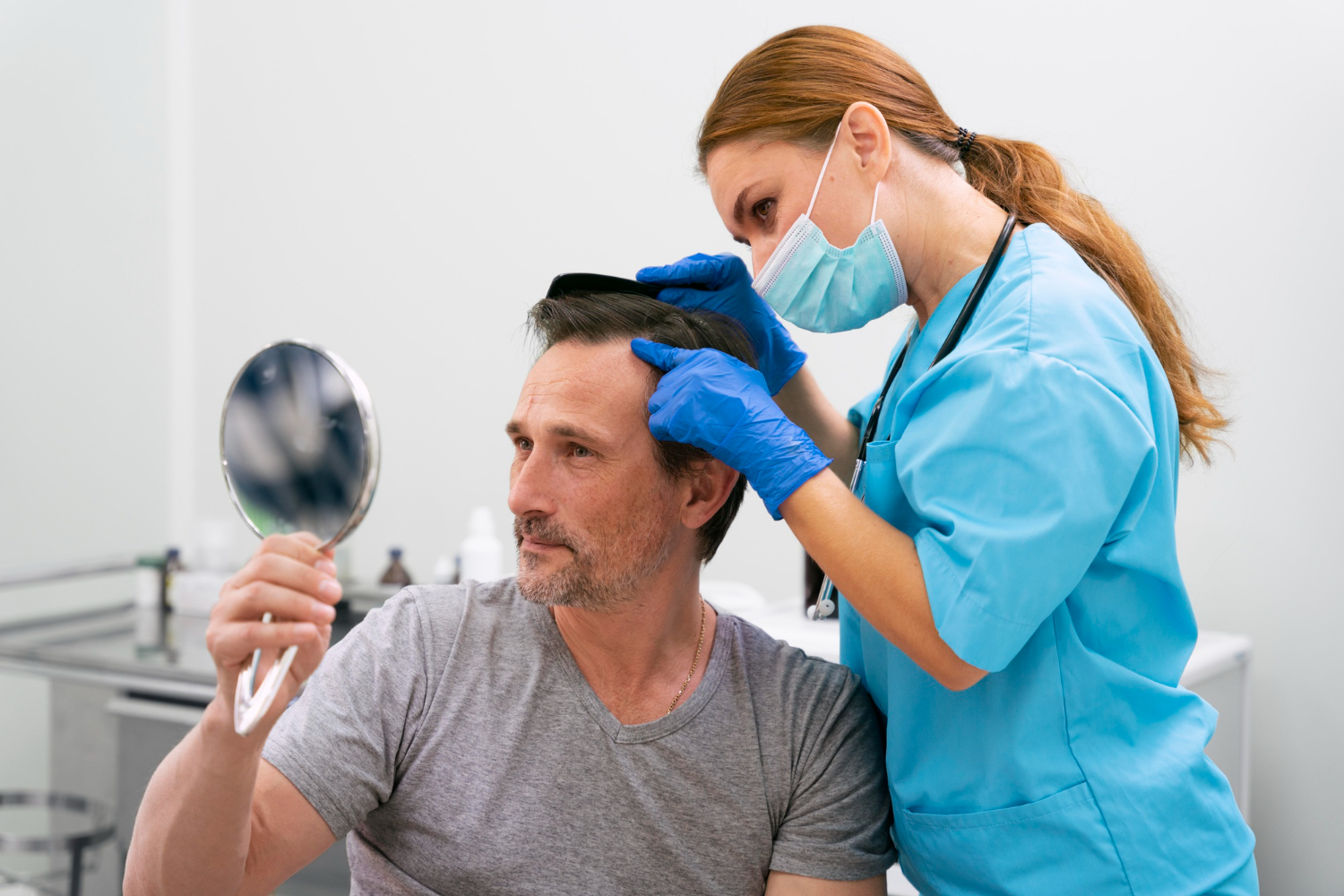
This guide gives you the real picture. No exaggerated promises, no clinic jargon — just honest, clear information so you can make the right decision for yourself. Ready? Let's get into it →
What Is Hair Transplantation and How Does It Work?
The concept is simpler than most people expect.
Your scalp has a "safe zone" — the back and sides of your head — where hair follicles are genetically programmed to resist falling out, even in people with significant baldness. A hair transplant takes follicles from that zone and relocates them to wherever you are thinning or balding. Because those follicles carry their original genetic blueprint, they continue growing in their new location. Permanently. The transplanted hair behaves exactly like your original hair — it grows, gets cut, and cycles naturally for the rest of your life.
This is what separates a transplant from every other hair loss treatment. PRP, minoxidil, GFC therapy — all genuinely useful for the right patient at the right stage — but none of them restores hair to a bald patch the way transplantation does. For pattern baldness specifically, it remains the only proven long-term solution.
FUE vs FUT — Which Technique Is Actually Right for You?
This is the question most patients arrive with, and the honest answer is: it depends on your scalp, not on what sounds more modern.
FUE (Follicular Unit Extraction) removes individual follicles one by one using a micro-punch tool less than 1 millimeter wide. The healing marks are tiny and scattered — virtually invisible even with a shaved head. No linear scar, faster recovery, and ideal for patients who prefer short hairstyles.
FUT (Follicular Unit Transplant) removes a strip of scalp from the donor zone, which is then divided into individual grafts under magnification. It does leave a fine linear scar — but it allows significantly more grafts to be harvested in one session, making it the better option for patients with advanced hair loss who need high graft counts.
Neither is universally superior. A surgeon who recommends one without examining your scalp density, your degree of loss, and your long-term pattern is already cutting corners. At the best hair transplant in Hyderabad clinics, technique selection happens after a proper assessment — not before.
Are You the Right Candidate Right Now?
Not everyone experiencing hair loss is ready for surgery today. Genuinely good clinics will tell you this — even if it means delaying your procedure. You are likely a strong candidate if your hair loss has stabilised, your donor zone is still reasonably dense, you are in good overall health, and you have realistic expectations about the timeline. Results build over twelve months — not twelve days.
You may need to wait if your hair loss is still actively progressing — particularly if you are in your early twenties. Operating on an unstable pattern means the surrounding native hair continues to thin after surgery, leaving the transplanted area surrounded by new baldness. It is a scenario entirely avoidable by waiting. Underlying medical conditions matter too. Thyroid disorders, anaemia, and hormonal imbalances directly affect graft survival and regrowth. These need to be treated before surgery, not after.
Step-by-Step: What Actually Happens During the Procedure
Here is what a proper procedure day looks like — no surprises.
Consultation and planning happen well before the procedure itself. Scalp analysis, donor density mapping, blood work review, and an honest conversation about what is achievable. The graft count is estimated, the technique finalised.
Hairline design is done with you seated upright before anaesthesia. Your surgeon marks the new hairline based on your facial structure, your age, and where your hair loss is realistically likely to go over the next two decades. This step has enormous impact on the final look.
Anaesthesia is administered to both the donor and recipient areas. The injections sting briefly — that is the truth. Once they take effect, the rest of the procedure is completely painless. Most patients listen to music or watch something on their phone.
Harvesting and graft preparation follow. FUE extractions or FUT strip removal happens first, then a trained team prepares the grafts under magnification—sorting them into single, double, and multi-hair units and storing them in a chilled holding solution.
Recipient site creation and implantation are where the surgeon's skill is most visible. Tiny incisions are made at exact angles and depths to replicate the natural direction of hair growth. Single-hair grafts line the hairline; multi-hair grafts fill the crown. A full session of 2,000 to 3,000 grafts typically takes 7 to 9 hours.
Recovery—The Parts Nobody Warns You About
The first 72 hours are less about pain and more about restriction. And the list of restrictions is real. No touching the transplanted area. No washing. No sun. No alcohol. No exercise. Sleep elevated at 45 degrees — a travel pillow works surprisingly well. If you have a desk job, you can typically return after two or three days. Physical work, sweating, gym sessions — wait a full ten days minimum. Between Day 3 and Day 10, gentle washing begins using a soft-pour technique — never direct water pressure on the grafts. Small scabs form around each follicle and fall off naturally by Day 7 to 10. Do not pick them. One pulled scab can remove a graft with it.
Then—around Week 2 to 4 — the transplanted hair sheds. This alarms almost every patient who was not warned about it. The hair shaft falls out, but the follicle beneath is alive and intact. New growth starts from scratch. Understanding this in advance makes those weeks dramatically easier to get through.
What Results Look Like — Month by Month
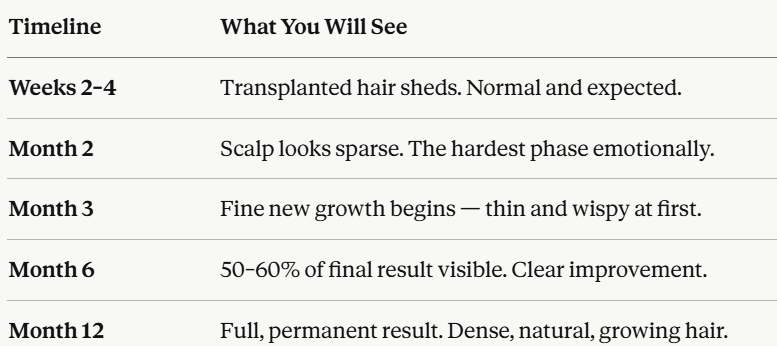
Month 12 is when most patients feel the full impact of what they decided. For the right candidate, it genuinely changes things.
How to Choose the Right Clinic
The best hair transplant in Hyderabad is not always the most advertised one. Here is what actually matters when evaluating a clinic:
The surgeon performing your procedure should be a qualified plastic surgeon, dermatologist, or cosmetic surgeon with specific, documented training in hair restoration. Ask how many procedures they have personally performed — not how many their clinic has done. Ask to see real before-and-after photos from actual patients. Not the four perfect results on the homepage — ask for a broader set, including patients with similar hair loss patterns to yours.
Ask what happens if you need a follow-up session. Does the clinic have a clear plan for managing your hair loss long-term, or are they focused on one transaction?
Get an itemised written quote. Hair transplantation in Hyderabad is priced per graft — you should know the cost per graft, the estimated graft count, and what follow-up care is included before you sign anything.
A clinic that rushes you through consultation, avoids specific questions about surgeon qualifications, or offers pricing that seems dramatically lower than market rate deserves serious scrutiny.
Conclusion
Hair transplantation in Hyderabad has come a long way. In experienced hands, the results at twelve months are natural, dense, and genuinely permanent — hair that grows, cycles, and behaves like it was always yours. But the outcome depends heavily on the decisions made before the procedure even begins. The right candidacy assessment. The right technique. The right surgeon. The right aftercare. Get those aligned, and the results speak for themselves.
If you are ready to have an honest conversation about what is possible for your specific situation, Ojas Aesthetics offers a free consultation — no pressure, no commitment, just clarity.
Book Your Free Consultation for the Best Hair Transplant in Hyderabad Today →
FAQs
Is hair transplantation painful?
The anaesthetic injections sting briefly. The procedure itself is completely painless. Most patients are surprised by how manageable the experience is compared to what they expected.
How long does the procedure take?
Between 6 and 10 hours, depending on graft count. Smaller sessions can finish in 4 to 5 hours.
When does new hair start growing?
Fine new growth typically emerges between 10 and 14 weeks after the initial shedding phase. Full results are visible at 12 months.
Is the result permanent?
Yes. Transplanted follicles are genetically resistant to pattern baldness and continue growing for life. Your remaining native hair may still thin over time—which is why long-term planning during hairline design matters.
Can I wash my hair normally after two weeks?
Yes, from Day 14, you can return to normal washing, following your surgeon's transition instructions.
Report this wiki page